Online training
Integrate AI into facilitation meaningfully, with intention.
An experience-based training for people who guide groups, teams and organizations and want to know how artificial intelligence can genuinely support their work. Not as an end in itself, not as a tech course, but as a practical tool for good facilitation.
- Less prep time: AI as a sparring partner instead of a blank page.
- Better results in the room: live analysis and summaries in minutes.
- With intention: your role, judgment and client relationships stay yours.
- 3
- online sessions of ~3 h
- 6 · 13 · 27
- October 2026
- €850
- net per person
Positioning
Facilitation is about bringing people together well: with clear goals, the right formats and thoughtful process design. At the same time, work is getting more complex, and with it the question: how can we, as facilitators, make our work smarter, more efficient and more effective?
In this training we make AI usable across the whole facilitation process: in preparation, during delivery and in follow-up. Case-based and honest, including the limits and the questions of stance that AI raises.
AI takes on the preparing, analyzing and documenting. The room, the relationship and the judgment stay with you. The difference is made in exactly that combination.
What it is
- A practice-oriented deep dive
- Case-based work with your own cases
- Honest reflection on possibilities and limits
- Peer exchange between practitioners
What it isn't
- An intro course on AI or facilitation
- A lecture or a tool demo
- Hype or tech enthusiasm
- AI-pro training for tech enthusiasts
What you take away
What you take away
You won't go home with a tool checklist, but with a better understanding, hands-on experience and fresh ideas for your practice.
- You understand how AI can be used across the whole facilitation process: in preparation, delivery and follow-up.
- You've tried concrete tools and know what works for your work and what doesn't.
- You can use AI as a sparring partner, idea generator or co-facilitator.
- You have reflected on what AI does to your role, your independence of thought and your client relationships.
- You leave with a network of facilitators who have set out on the same path.
Who for
For experienced facilitators who want to take the next step
A good fit if you…
- have already tried ChatGPT or similar, but haven't yet built a real workflow into your practice
- want to know what AI can concretely do in preparation, delivery and follow-up
- are up for trying things live, even when not everything works right away
- also care about the questions behind it all: role, stance, responsibility
Less suitable if you…
- are still at the start of your facilitation practice; this training assumes experience
- are already deep in the AI world, building your own agents or GPTs
The flow
3 sessions along the facilitation process
Each session ~3 hours, 1–2 weeks apart, with room to try what you learn in your own practice between dates.
Preparation & Design
AI-supported workshop design, agenda development, choosing methods and formats. Prompting for facilitators. Live, we develop a workshop agenda together with AI and reflect: what does AI change in preparation, and what stays my job?
Delivery & Facilitation
AI as live support: real-time analysis of contributions, mood checks, summaries. Documentation and photo-protocol automation. We bring our own cases and look honestly: what does AI do to the dynamics in the room, and what needs genuine human presence?
Follow-up & Development
AI-supported analysis, structuring results, creating reports, capturing learnings. Plus the questions of stance that AI raises: independence of thought, data protection, ethics. And a shared outlook on where AI in the facilitation world is heading.
Tools
What we work with
Grouped along the facilitation process, from language models to whiteboards and documentation.
Before the format · Design & preparation
Language models (LLMs)
Claude · ChatGPT · Gemini · Mistral
Visuals & design
Gamma · Canva · Miro · NotebookLM
Image generation
Midjourney · DALL·E · Adobe Firefly
Translation & organisation
DeepL · Notion
During the format · Facilitation & prototyping
Digital whiteboards
Miro · Mural · Stormz
Live transcription
Otter · Fireflies · Jamie
Interaction & polling
Mentimeter
Prototyping & atmosphere
Lovable · Framer · Suno
After the format · Documentation & transfer
Language models (LLMs)
Claude · ChatGPT
Reports & visualisation
Pitch · Gamma · NotebookLM
Feedback & evaluation
Mentimeter · SurveyMonkey
The tool landscape changes fast. These examples show the range, but in the training what matters isn't the individual tool, it's how you weave it into your facilitation.
From our practice
How we already use AI ourselves
Three examples from our own facilitation work, along the same arc: before, during and after the workshop.
Before the workshopMethod sparring partner (agent)
We bundle our method handbooks, articles and podcasts on methods and our own practice (such as Liberating Structures or Hyper Island) into a single skill and use it as a sparring partner while preparing workshops. Before a new format we ask the agent: which method fits here? What approach makes sense? The result surprises us regularly. It suggests not only familiar approaches but also methods we had forgotten or never used in this context. It remembers more than we do and combines ideas in unexpected ways. That makes preparation faster and more creative.
Claude · Langdock (Skills)
During the workshopLive transcription & live results
In in-person workshops we record conversations and discussions, with the participants' consent of course. A workflow transcribes and analyses the audio automatically. What's special: we get the results in real time, often during the lunch break or between sessions. That lets us work directly with the group: is the direction right? Does everyone feel heard? Did we summarise it well, or is something missing? Instead of painstakingly reconstructing notes at the end of the day, we make the results visible right away and check them together.
Langdock (Workflows)
After the workshopSession minutes in seconds
After a workshop, sometimes in the middle of one, we photograph every flipchart, whiteboard, sticky note and scribble. We upload the images and have them transcribed automatically. From that we get structured summaries to send to all participants. Depending on what is on the images, we either share the transcripts directly or turn them into clear session minutes. What impresses us again and again: the AI reads handwriting remarkably well, in any language, and often better than we can ourselves. Even illegible scrawls become usable.
Claude
Requirements
What you need, and what you don’t
What you bring
- A laptop or desktop (no tablet, you work across several browser tabs at once)
- Stable internet for Zoom plus tools open at the same time
- A free ChatGPT account (the free tier is enough to start)
- A facilitation case or workshop context of your own to work with
Recommended, but not required
- ChatGPT Plus or Claude Pro (~€20/month) for a few of the exercises
- Openness to trying things live, even when they don't work right away
Not needed
- Deep prior AI knowledge
- Programming skills
- Already knowing specific tools
Who offers this
Your trainers

Bianca is a facilitator and organizational developer with over 20 years of experience, guiding teams and organizations through change, strategy and transformation internationally. She founded Linie 22, hosts the Future of Facilitation Lab community, and builds her own AI workflows for real facilitation practice: from preparation to live sessions to follow-up.
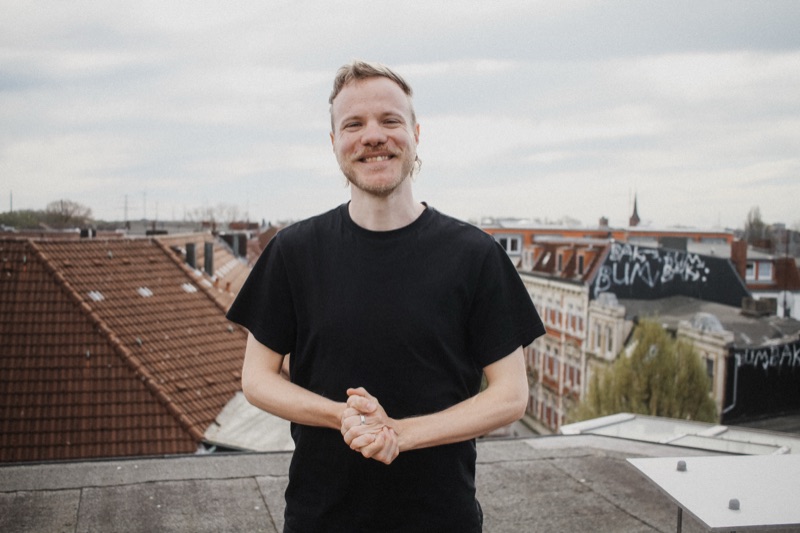
Max works at the intersection of futures research, facilitation and digital transformation. He uses AI not as a gadget, but as a serious tool for thinking, designing and facilitating. He offers a range of trainings at this intersection.
We don't know everything, and we say so. But we've worked hands-on with the tools, played through cases and have a network we can ask. When we don't know something, we find it out together.
Participation
net per person · 10% group discount for 2+ people from one organization
Save my spot- Format
- Online, 3 sessions of ~3 hours
- Dates
- 6, 13 & 27 October 2026, 4–7 pm CET
- Platform
- Zoom + digital whiteboard
- Group size
- Small group, 10–16 participants
- Language
- German
- Method
- Experience-based, case-based, interactive
FAQ
Good to know
Do I have to be an AI pro?
No, and that's intentional. You should have used ChatGPT or a similar tool before, that's all it takes. The training is for facilitators, not tech enthusiasts.
Is this a classic AI course?
No. We don't explain algorithms or compare tool features. Facilitation is always at the centre; AI is the tool, not the topic.
What makes this format special?
Its consistent focus on practice. You work with your own cases, experiment live with tools and get space to make and reflect on your own experiences. And we use AI ourselves to build this training.
What do I need technically?
A laptop and a free ChatGPT account, that's enough to start. We introduce further tools and try them out together. No pre-installation needed.
How many people take part?
A small group of 10 to 16 people, so genuine exchange is possible. The training runs as soon as there are enough registrations.
Curious how AI could change your facilitation practice?
If you don't want AI explained to you but want to integrate it meaningfully into your work, practically and honestly, then AI × Facilitation is what you're looking for.
Registration opens soon. Save your spot now and we will send you the details the moment it starts.